
Home › Massachusetts
Tree Work in Massachusetts: What Homeowners Should Know
We refer tree companies in Greater Lowell, MA and add towns only once we can cover them properly. Every town page lists who handles road trees and wetland filings there. Call (978) 698-4783 or send the form. A person reads every request and replies with what happens next.
- Free for homeowners
- Town rules on every page
- Starting in Greater Lowell, MA
Ask About Tree Service in Your Area
Tell us what the tree is doing and where it stands. A person reads it and replies with what happens next.
Please add your name, a 10-digit phone number and a valid email.
Your request didn't go through on our end. Please call (978) 698-4783 so it isn't lost.
Too many requests have come from this connection in a short time. Please call (978) 698-4783 and we'll take it from there.
We couldn't finish the spam check. Wait a moment and send it again, or call (978) 698-4783.
Service area
Massachusetts towns we cover
A town with its own page covers its tree warden and how road trees are handled, any designated scenic roads, the local wetland bylaw and its no-disturb zones, and the town's brush pickup, drop-off and burning rules. The other towns are in our area too; send a request from any of them.
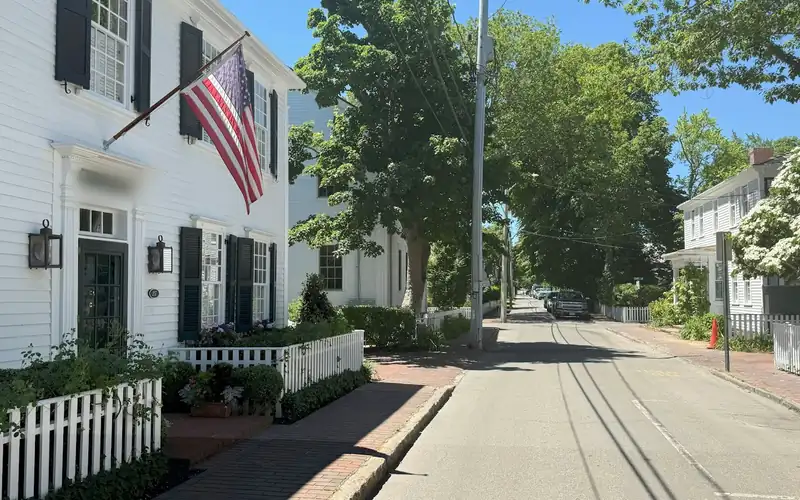
Greater Lowell
State rules
The state laws that shape a Massachusetts tree job
Trees along public roads. A tree within a public way or on its boundary is a public shade tree, and where the boundary can't be found in the records the tree is treated as public until shown otherwise (M.G.L. c.87 §1). Only the tree warden or a deputy may cut, trim or remove one, even if it stands on your land, unless the tree warden gives a written permit. Taking one down requires a public hearing, announced on the tree and in two other public places at least seven days ahead and in a local newspaper in two successive weeks (c.87 §3). If anyone objects in writing, the removal also needs approval from the select board or mayor (c.87 §4).
Scenic roads. Once a town designates a road as scenic, road work that cuts or removes trees or takes down stone walls needs the planning board's written consent after an advertised hearing, combined with the tree warden's hearing when both apply (M.G.L. c.40 §15C).
Wetlands and the 100-foot buffer. Altering a wetland, bank or other protected area requires a notice of intent with the conservation commission first (M.G.L. c.131 §40). The state's regulations extend review to work within 100 feet of those areas. Vista pruning more than 50 feet from the wetland edge counts as a minor activity, but there's no general allowance for removing trees in the buffer (310 CMR 10.02). Many towns add their own bylaw on top, with stricter no-disturb strips.
Digging. State law defines excavation broadly, covering digging, augering, grading and more, and requires notice to Dig Safe at least 72 hours before excavating, not counting weekends and legal holidays (M.G.L. c.82 §40A, definition of excavation, c.82 §40). Dig Safe recommends that the contractor make the call when one is hired (Dig Safe FAQ), and its members mark only their own lines, not private ones like sprinkler pipes or yard lighting (how Dig Safe works). Ask your tree company whether its job needs a ticket.
Wires to the house. National Grid trims around its high-voltage lines and leaves the low-voltage service drop to your house to you; it will disconnect that wire for your tree company with at least five days' notice at 1-800-322-3223 (National Grid tree FAQ).
Burning the brush. Brush can be burned from January 15 to May 1 with a fire department permit, 10 a.m. to 4 p.m., at least 75 feet from dwellings. Stumps and leaves can't be burned, and 22 cities and towns, Lowell among them, ban open burning entirely (open burning rules).
Pests that change the decision. Spongy moth caterpillars have caused oak decline and mortality across the state, and for larger trees the Department of Conservation and Recreation recommends hiring a certified arborist who is a licensed pesticide applicator (DCR spongy moth guide). Emerald ash borer has been confirmed in 280 Massachusetts communities, and the state advises chipping ash wood or leaving it on site rather than moving it (emerald ash borer guide).
Last verified November 2026.
What we refer
Tree jobs, explained for Massachusetts homeowners
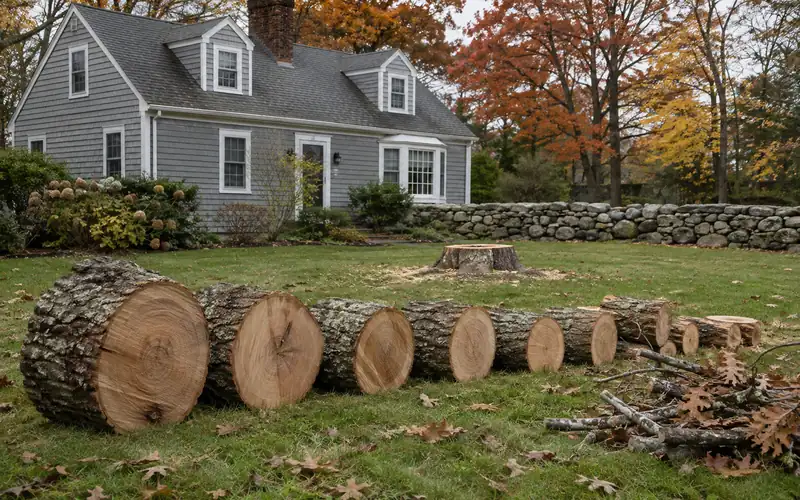
Tree Removal
Dead, dying, leaning or simply unwanted trees, including the tight ones that have to come down in sections over a roof.
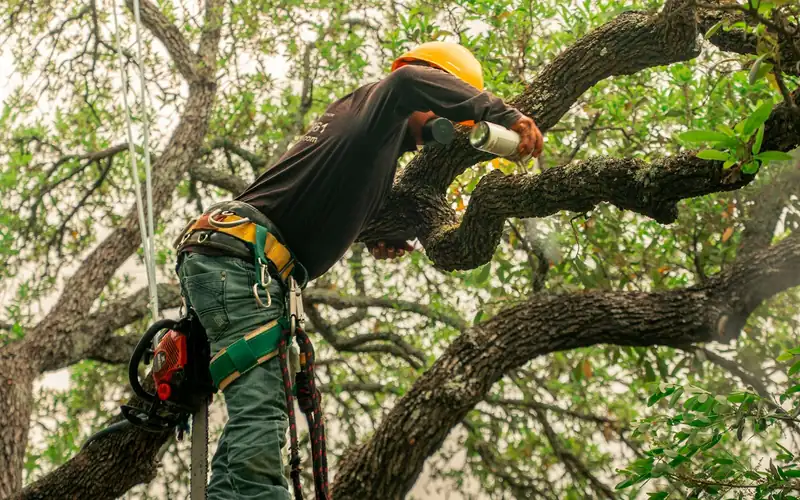
Pruning & Trimming
Deadwood out, limbs lifted off the roof and the service wire, and crowns thinned so the tree stands up to wind and snow.
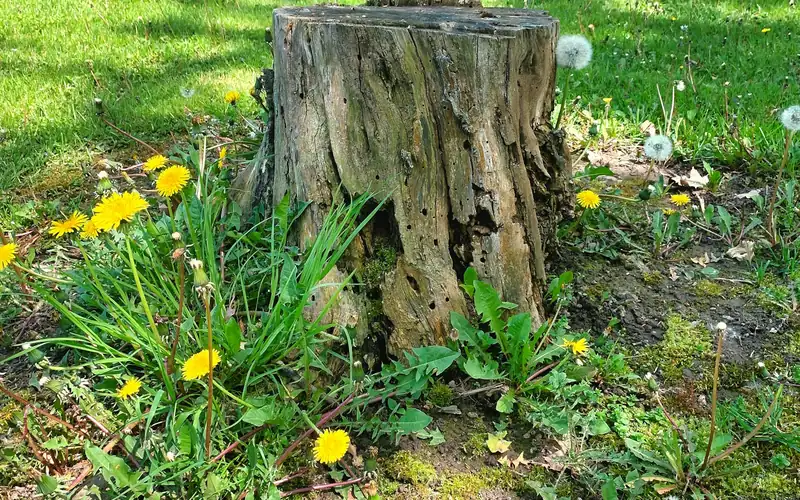
Stump Grinding
Grinding the stump below grade so the spot can be seeded, planted or paved, with the chips hauled off or left as mulch.
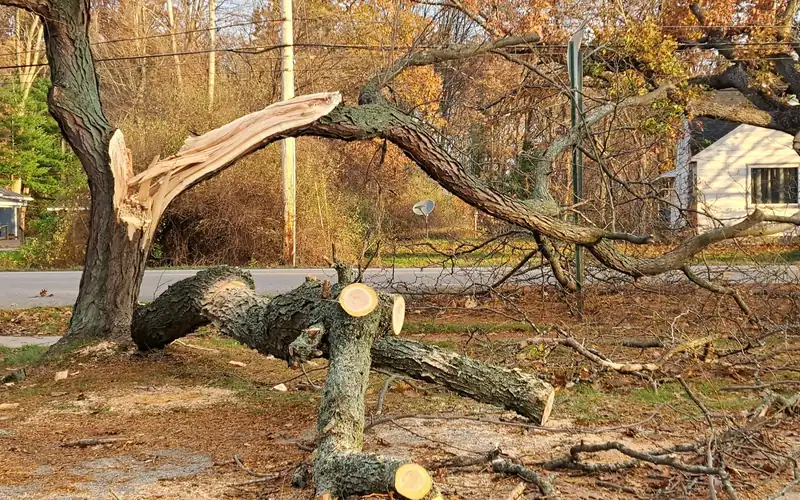
Storm Damage & Emergency Work
Trees and big limbs on the house, the car or the driveway after wind, ice or a nor'easter, once the utility has made any wires safe.
FAQ
Massachusetts tree questions
What should I ask about a tree company's credentials?
Ask for its certificate of liability insurance and, if it has employees, its workers' compensation coverage, which you can confirm on the state's lookup. If it says its arborists are certified, check the names: the Massachusetts Arborists Association lists Massachusetts Certified Arborists, a voluntary program it runs, and the International Society of Arboriculture keeps a directory for ISA Certified Arborists.
Does a tree company need Home Improvement Contractor registration?
The state exempts contractors who work only in landscaping, and its guidance chart lists routine landscaping as not needing registration, but it doesn't say whether tree removal counts (201 CMR 18.01; state HIC guidance). You can look any company up on the state's HIC search, and you should get a written agreement either way.
After a storm, who clears a tree that fell on my wires?
National Grid says customers are responsible for removing broken or damaged trees and limbs, including limbs it moves off its equipment, and that it does not remove trees from homes. Treat every downed wire as live: stay 30 feet back and call 911 or National Grid at 1-800-465-1212.
Can I burn the brush from my tree job?
Only in towns that allow it, only with a permit from your fire department, and only from January 15 to May 1, between 10 a.m. and 4 p.m., at least 75 feet from any house. Brush may be burned; stumps, leaves and grass may not. Lowell is one of the cities where open burning is banned altogether.
What does it cost me to use New England Tree Service?
Nothing. The request and the referral are free; the tree company prices the work.