Home › New Hampshire
Tree Work in New Hampshire: What Homeowners Should Know
We refer tree companies in Greater Nashua, the Derry, Salem and Windham area, Greater Manchester and the Seacoast. Each town page covers burn permits, road trees and brush options as far as that town's own sources let us confirm them. Call (978) 698-4783 or send the form. A person reads every request and replies with what happens next.
- Free for homeowners
- NH rules in plain English
- Nashua to the Seacoast
Ask About Tree Service in Your Area
Tell us what the tree is doing and where it stands. A person reads it and replies with what happens next.
Please add your name, a 10-digit phone number and a valid email.
Your request didn't go through on our end. Please call (978) 698-4783 so it isn't lost.
Too many requests have come from this connection in a short time. Please call (978) 698-4783 and we'll take it from there.
We couldn't finish the spam check. Wait a moment and send it again, or call (978) 698-4783.
Service area
New Hampshire towns we cover
Brush burning in New Hampshire runs through each town's forest fire warden, and scenic roads are designated locally, by town meeting or, in a city, the city council, so each town page covers burn permits, roadside trees and brush as far as that town's own sources let us confirm them. Towns without a page yet are still in our area; send a request from any of them.
Greater Nashua
Derry, Salem & Windham
Greater Manchester
The Seacoast
State rules
The state laws that shape a New Hampshire tree job
Burning the brush. Before kindling a fire, you need a written permit from the forest fire warden of the town where you'll burn; none is needed while the warden or the warden's agent is present, and burning without one is a misdemeanor that can also leave you paying firefighting costs (RSA 227-L:17). The Division of Forests and Lands adds that no permit is needed when snow covers the ground within 100 feet of the fire's edge well enough to keep woodland fuels from catching. Towns that have opted in issue permits online at NHFirePermit.com; elsewhere you get one from the warden, a deputy warden or an issuing agent. Only untreated wood, untreated pallets, campfire wood, brush or charcoal may be burned, with no wood over 5 inches in diameter, and never painted, stained or pressure-treated wood or construction debris. Fires up to 2 feet across must be 25 feet from buildings; anything up to 4 feet needs 50 feet, and fires over 2 feet across may burn only from 5 p.m. to 9 a.m. unless it is actually raining. The permit holder must be 18 or older and the landowner or someone with the landowner's written permission, and the fire must be drowned with water until there's no smoke, heat or flame (NH fire permits).
Scenic roads. Town meeting can designate any town road other than a Class I or II highway as scenic, and the town has to keep a public list of them (RSA 231:157). After that, the town, the state and utilities can't cut or remove trees 15 inches or more around at 4 feet off the ground, or take down stone walls, for road or utility work without the planning board's written consent after a public hearing. Designation generally doesn't limit what you do on your own land, except where town-owned shade trees, boundary markers or stone walls are involved (RSA 231:158). Eversource says it won't cut trees on a designated scenic road without planning board approval and a hearing (Eversource NH tree FAQ).
Waterfront lots. Protected shoreland is land within 250 feet of lakes and ponds over 10 acres, tidal waters, larger rivers and designated river segments (RSA 483-B:4). In the first 50 feet, the waterfront buffer, each 25-by-50-foot segment must keep at least 25 points of trees and shrubs, scored by trunk diameter from 1 point for a 1-to-3-inch sapling up to 15 points for a tree over 12 inches. Dead, diseased or unsafe trees aren't scored, stumps and roots stay in the ground unless NHDES approves removal, and pruning is allowed as long as it doesn't endanger the plant. From 50 to 150 feet, at least a quarter of the area must stay natural woodland, though hazard trees may come out (RSA 483-B:9). NHDES says shoreland projects typically require a permit and offers an Inspector of the Day at (603) 271-2147 (NHDES protected shoreland). Separately, within 150 feet of great ponds and public highways, no more than half the basal area may be cut in any 12 months (RSA 227-J:9).
Intent to cut and the timber tax. Every owner must file a notice of intent to cut before each cutting operation, and the yield tax is 10% of stumpage value. The law exempts an owner cutting "up to 30 cords of fuel wood for his or her own consumption" and "up to 15,000 board feet of logs from his or her own land for use in the construction" of buildings the owner isn't building for sale (RSA 79:1 and 79:10). The notice is form PA-7, filed with and signed by your town (NH timber tax).
Spraying trees. The state's pesticide law licenses applying pesticides, and its text doesn't cover pruning or removal. A company spraying your trees needs a commercial applicator license, required to apply pesticides on someone else's property (Division of Pesticide Control). The law exempts applications "within, around, under, or in the immediate vicinity of a living unit by the occupant thereof" (RSA 430:33 and 430:46). Tree spraying falls under the shade and ornamental and forest pest control categories (Pes 300), and licensing questions go to (603) 271-3551. Climbing and removal credentials are a separate matter: the NH Arborists Association, a nonprofit, runs its own certified arborist program with a public list (NH Arborists Association).
Firewood from away. Under the state's exterior firewood quarantine, effective July 18, 2011, bringing any firewood into New Hampshire from out of state requires a compliance agreement (firewood quarantine). Suspected invasive pests can be reported through NHBugs.org.
Digging. New Hampshire's definition of excavation names "tree and root removal" alongside grading, boring and milling (RSA 374:48). Notice is required for excavation within 100 feet of an underground facility at least 72 hours ahead, not counting weekends and legal holidays, and the excavator must white-mark the dig area (RSA 374:51). Dig Safe is free: call 811 or file online (Dig Safe). Ask your tree company whether its job needs a ticket.
Last verified November 2026. Fees, restrictions and deadlines on this page are due for re-checking by May 2027.
Power lines
Trees near the wires: what each utility does
Eversource. Its line crews keep limbs out of a zone 8 feet to the side, 10 feet below and 15 feet above the wires, on a four-to-five-year cycle. Trimming over a house or driveway beyond that is the owner's job with a private contractor. Eversource will temporarily remove the pole-to-house wires so that contractor can work safely, may take off limbs rubbing the service wires at no charge, and leaves cut wood with the owner (Eversource NH tree FAQ).
Liberty. Liberty uses the same 15, 10 and 8 foot clearances and a four-to-five-year cycle. Pruning outside that schedule is generally the homeowner's responsibility, using an electrically qualified contractor, and removing a tree near the lines requires disconnecting service; call Customer Care at 1-800-833-4200 (Liberty vegetation maintenance).
Unitil. Unitil's service-equipment page tells customers it's their responsibility to keep trees clear of the line from the pole to the house, and says Unitil will disconnect and reconnect service at no charge for tree work near the lines, at 1-888-301-7700 (Unitil service equipment).
New Hampshire Electric Cooperative. The co-op clears 15 feet either side of its pole lines, ground to sky in most places, aiming for an eight-year cycle. It doesn't remove the wood, stumps are the owner's, homeowners shouldn't work near the lines themselves, and it can de-energize a service line for a fee (NHEC vegetation management).
After accidents involving private tree contractors, the state Department of Energy, Unitil and Eversource warned in September 2023 to stay at least 10 feet from lines, assume they're energized and call the utility before any work near them (NH Department of Energy).
What we refer
Tree jobs, explained for New Hampshire homeowners
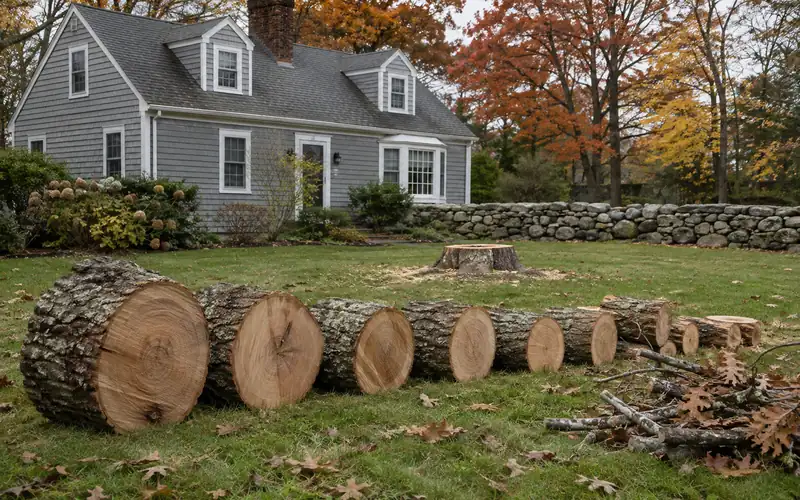
Tree Removal
Dead, dying, leaning or simply unwanted trees, including the tight ones that have to come down in sections over a roof.
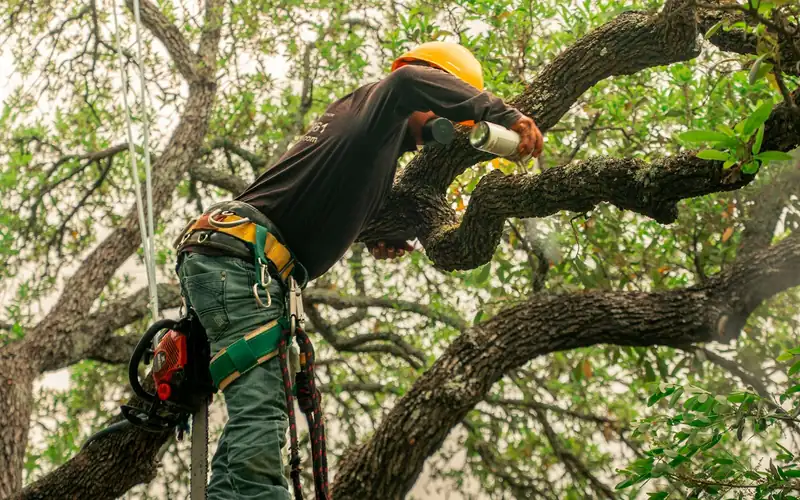
Pruning & Trimming
Deadwood out, limbs lifted off the roof and the service wire, and crowns thinned so the tree stands up to wind and snow.
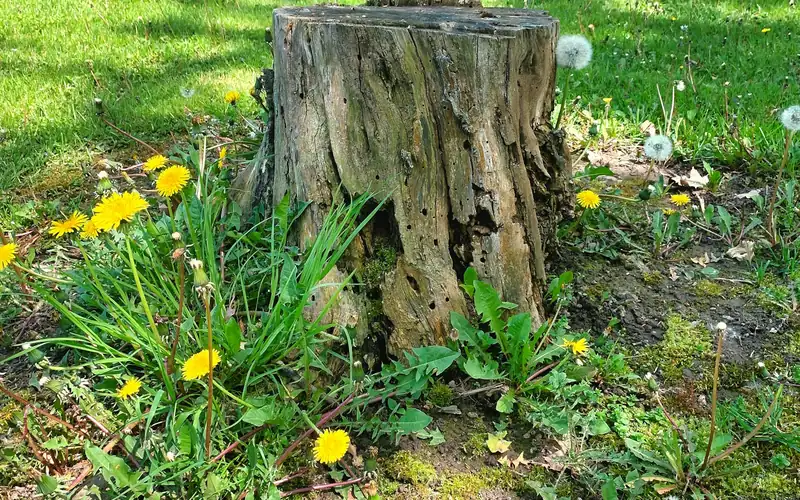
Stump Grinding
Grinding the stump below grade so the spot can be seeded, planted or paved, with the chips hauled off or left as mulch.
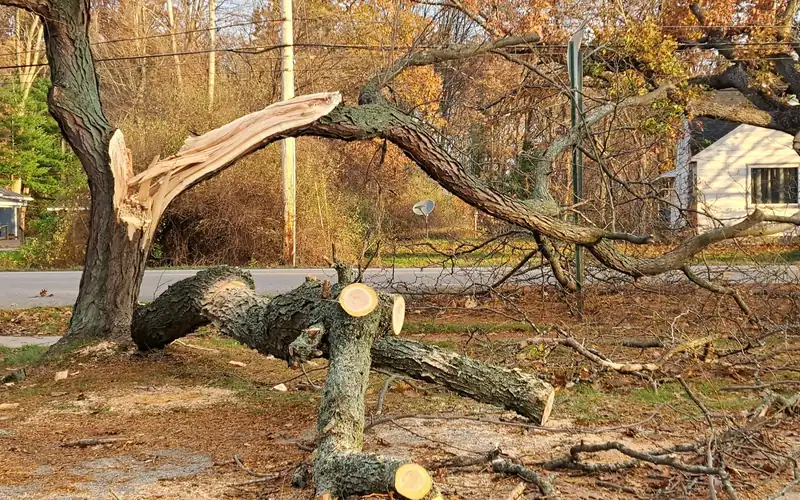
Storm Damage & Emergency Work
Trees and big limbs on the house, the car or the driveway after wind, ice or a nor'easter, once the utility has made any wires safe.
FAQ
New Hampshire tree questions
Do I need a permit to burn the brush from a tree job?
Yes, as a rule. State law requires a written permit from your town's forest fire warden before you burn, unless the warden or the warden's agent is there. Some towns issue permits online through NHFirePermit.com. Only untreated wood and brush up to 5 inches thick may go on the fire, and anything over 2 feet across may burn only between 5 p.m. and 9 a.m. unless it is actually raining.
Does cutting trees on my own land mean timber tax paperwork?
The law requires an owner to file a notice of intent to cut before each cutting operation, and the yield tax is 10% of stumpage value. The statute exempts "up to 30 cords of fuel wood for his or her own consumption" and "up to 15,000 board feet of logs from his or her own land for use in the construction" of the owner's own buildings, as long as they aren't built for sale. The form is the PA-7, filed with your town.
Who deals with the wire from the pole to my house?
It depends on the utility. Eversource will temporarily take down the pole-to-house wires so your tree company can work safely. Liberty says removing a tree near its lines requires disconnecting service, and Unitil disconnects and reconnects for tree work at no charge. The New Hampshire Electric Cooperative can de-energize a service line for a fee. Call before work starts near any line.
Can I take trees down along my lake or river frontage?
On protected shoreland, the first 50 feet from the water is a buffer scored with points, and a tree can come out only if its 25 by 50 foot segment keeps at least 25 points. Dead, diseased or unsafe trees don't count toward the score, and stumps must stay in the ground unless NHDES approves removing them. NHDES takes questions at (603) 271-2147.
What does it cost me to use New England Tree Service?
Nothing. The request and the referral are free; the tree company prices the work.