Home › Massachusetts › Lexington
Tree Service in Lexington, MA
During major construction or demolition, Lexington's Tree Bylaw reaches onto private lots: removing a tree 6 inches or more across in the setback areas takes a permit priced by the inch. Call (978) 698-4783 or use the form. A person reads every request and replies with what happens next.
- Free for homeowners
- Insurance checked first
- East Village to the Burlington line
Ask About Tree Service in Your Area
Say what the tree is doing, and whether a building project or a wetland is involved. A person reads it and replies with what happens next.
Please add your name, a 10-digit phone number and a valid email.
Your request didn't go through on our end. Please call (978) 698-4783 so it isn't lost.
Too many requests have come from this connection in a short time. Please call (978) 698-4783 and we'll take it from there.
We couldn't finish the spam check. Wait a moment and send it again, or call (978) 698-4783.
Tree work in Lexington
Tree jobs under Lexington's canopy
Tree Removal
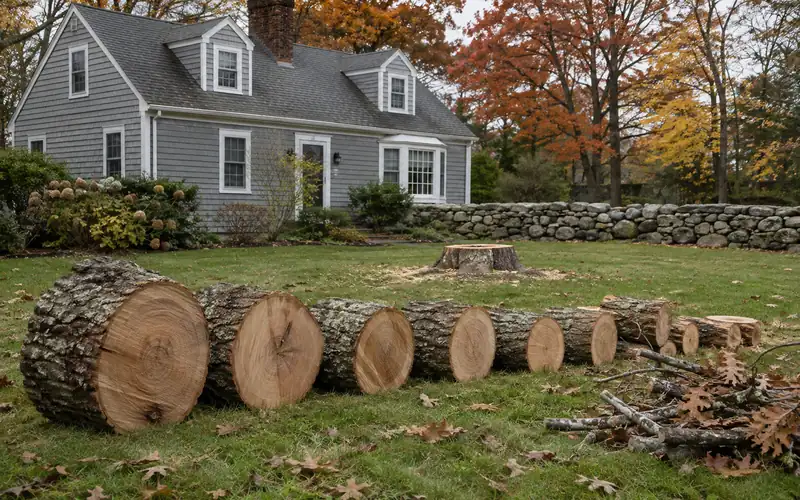
Dead, dying, leaning or simply unwanted trees, including the tight ones that have to come down in sections over a roof.
Pruning & Trimming
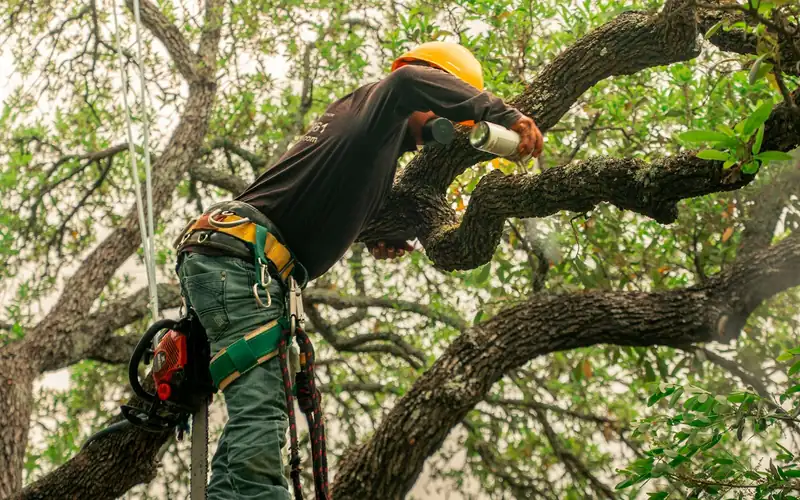
Deadwood out, limbs lifted off the roof and the service wire, and crowns thinned so the tree stands up to wind and snow.
Stump Grinding
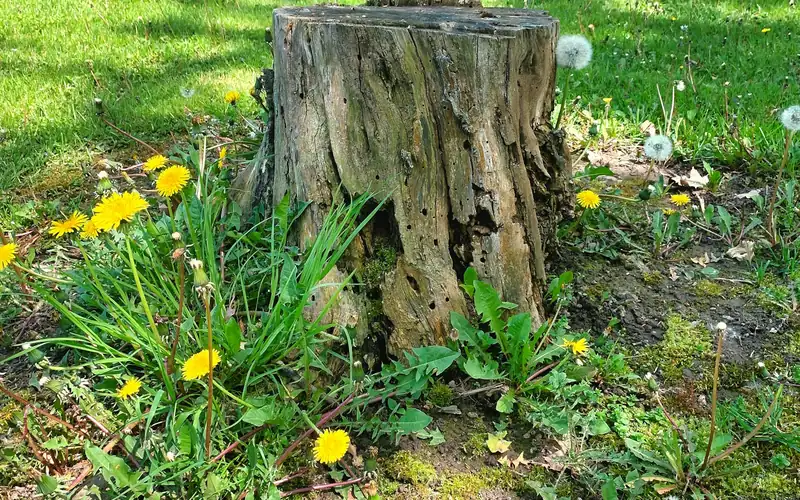
Grinding the stump below grade so the spot can be seeded, planted or paved, with the chips hauled off or left as mulch.
Storm Damage & Emergency Work
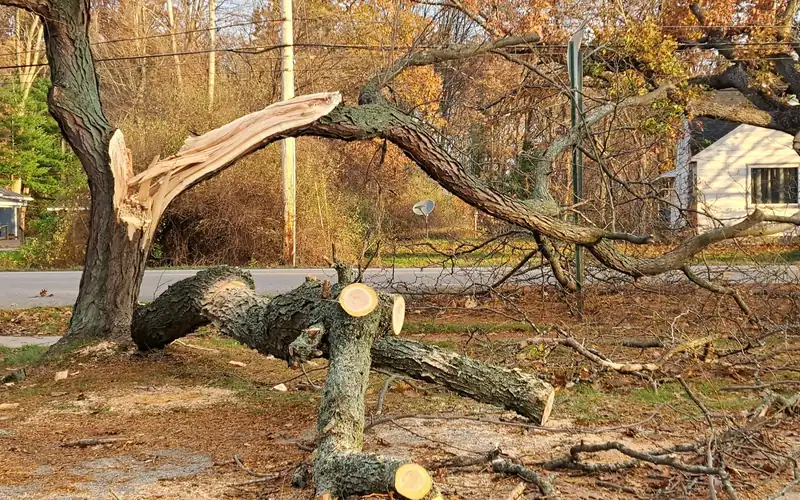
Trees and big limbs on the house, the car or the driveway after wind, ice or a nor'easter, once the utility has made any wires safe.
Not sure what the tree needs?
(978) 698-4783Tell us if a building permit is in the works or a wetland is nearby. In Lexington, either one can bring the Tree Warden or Conservation into the job.
Rules and permits
Who decides about trees in Lexington
Lexington's Tree Warden is the DPW's Superintendent of Public Grounds (tree FAQ), who rules on street trees and on private trees covered by the Tree Bylaw during construction. The Conservation Commission handles trees within 100 feet of a wetland. Outside a construction project and away from wetlands, we found no town permit for a homeowner taking down a private tree.
- Tree Warden
- DPW Superintendent of Public Grounds; Town Office 781-862-0500
- Street trees
- Tree Warden permission and a public hearing; remover pays appraised value
- Tree Bylaw
- Private trees 6 in.+ in setbacks during major construction; $20 per inch
- Wetlands
- No tree removal within 25 ft; $75 Conservation hazard tree review
- Burning
- Online permit, January 15 to May 1; 75 ft from buildings and fences
Street trees. A street tree is generally one in the public right-of-way between the sidewalk and the street (tree FAQ). The town's Tree Bylaw page says public shade trees can't be pruned, damaged or removed without the Tree Warden's permission, that a removal needs a public hearing, and that when a removal is granted, the person removing the tree pays its appraised value to the Town (Tree Bylaw page; M.G.L. c.87 §3). To ask for a new street tree, contact the Tree Warden; DPW checks whether the planting strip is wide enough, usually at least 4 feet, and adds suitable spots to a waiting list. Where the right-of-way won't work, a free Setback Planting Agreement puts the tree on your property near the street; the Town replaces it if it dies within a year, and after that it's yours (tree FAQ).
The Tree Bylaw during construction. Lexington adopted its Tree Bylaw, Chapter 120, in 2001, and the Select Board approved its current rules and regulations in December 2024. On private property it applies only during major construction or demolition, and only in the setback areas: 30 feet from the front lot line and 15 feet from the side and rear lines, or the zoning yard if that's larger. Protected trees measure 6 inches or more in diameter at breast height, and multi-trunk trees count at 15 inches combined; large protected trees are 24 inches and up (Tree Bylaw, Ch. 120; rules and regulations). Removal carries a permit fee of $20 per inch, with $200 per inch payable in lieu of replanting. Large protected trees need four times the removed inches in mitigation, and large shade species planted count four times. Dead trees, and trees a certified arborist documents as high or extreme risk, are exempt from mitigation. Retained, Town and mitigation trees have to survive one year past the certificate of occupancy (Tree Bylaw page). The application needs a surveyor's site plan and a certified arborist's protection plan, and the Tree Warden decides within 20 business days (Tree Bylaw, Ch. 120). The Tree Committee, set up with the bylaw in October 2001, hears appeals on private tree removals.
Wetlands and hazard trees. The town's wetland bylaw, Chapter 130, requires a permit to alter land within 100 feet of a wetland, and destroying vegetation counts as altering. Within 25 feet of a resource area, no trees, shrubs or other plants may be removed unless the work is part of an approved ecological restoration (wetland regulations). An administrative review policy dated October 3, 2022 covers hazardous tree removal with native replacements as required (Conservation rules and permits). Under the fee schedule effective March 1, 2023, a Conservation Hazard Tree Review costs $75 (Conservation fee schedule), and the Conservation Hazardous Tree Permit is filed on the town's OpenGov portal.
Historic districts. Lexington has four local historic districts, Battle Green, Hancock-Clarke, Munroe Tavern and East Village, and the district guidelines exempt routine plant material from review (Historic Districts guidelines).
Wires and digging. Eversource (NSTAR Electric) serves Lexington, according to the state's 2021 electric franchise list (electric franchise list). Eversource's tree-trimming FAQ, a general page that names no state, describes circuit-based trimming on a four- to seven-year cycle and says the company may temporarily remove a pole-to-house line so a contractor can work safely, if you call Eversource first (Eversource tree-trimming FAQs). For stump grinding, state law treats digging, augering and grading as excavation that needs Dig Safe notice at least 72 hours ahead, excluding weekends and legal holidays (M.G.L. c.82 §40A, definition of excavation, c.82 §40), and Dig Safe suggests the hired contractor make the call (Dig Safe FAQs).
Last verified November 2026. Fees, restrictions and deadlines on this page are due for re-checking by January 2027. New England Tree Service is a referral service. We don't cut trees, request hearings or file with the conservation commission.
Brush, burning and tree health
Brush, burning and pests in Lexington
Three sizes of brush. Brush an inch thick or less goes out as yard waste, in paper bags, lidless barrels or tied bundles, never plastic. Brush from 1 to 4 inches goes out with the trash, cut to 3 feet or shorter, in bundles no more than 2 feet across and 75 pounds, up to five bundles per collection day, and those bundles are incinerated rather than composted. To compost the 1- to 4-inch wood, take it to the brush pile at the Hartwell Avenue Composting Facility (Leaves, Yard Waste & Composting). Anything thicker than 4 inches doesn't fit the curbside rules at all.
Hartwell Avenue. The Lexington Composting Facility is at 60 Hartwell Avenue. The town's facility page points to the Lex Compost page for current hours, says the facility is closed on legal holidays and may close in bad weather, and asks you to call ahead at 781-274-8300 (Lexington Composting Facility). Under the town's 2025 guidelines, contractors need an annual Yard Waste Permit or pay by the cubic yard, with brush kept separate (contractor guidelines), so ask the tree company whether it will use the site.
Burning permits. Brush burning is allowed only from January 15 to May 1, with a permit applied for online. Each burn day, call 781-698-4700, option 8, after 9 a.m. for the recorded go or no-go and to record your permit number. Burn 10 a.m. to 4 p.m., lighting before 2 p.m., with an adult and a charged hose present. Only brush, cane and forestry debris may be burned, no grass, leaves, stumps or land-clearing debris, and the fire must be more than 75 feet from any building or structure, wooden, plastic and vinyl fences included. Fines run $100, $500 and $1,000 (Burn Permits).
60% canopy, 22,053 street trees. The town's February 2023 canopy assessment found tree canopy covering 60% of Lexington's land in 2021 imagery, up from 57% in 2014, with about 61% of the canopy on private residential land (Tree Canopy Assessment). A 2021 inventory counted 22,053 public shade trees. Norway maple, an invasive, made up 18%, ahead of black oak, white pine, red maple, red oak, hemlock and black cherry; 61% of the trees rated fair and 9% poor, and the report says most street trees need pruning (Lexington Tree Inventory).
The pests the town names. The town's pest page lists emerald ash borer, "devastating to all ash species"; hemlock woolly adelgid, which can kill untreated hemlocks in three to five years, though horticultural oil treatment can be effective; beech leaf disease, which kills American and non-native beeches; spotted lanternfly, with tree of heaven a key host; and Asian longhorned beetle (Invasive Species and Pests). Residents can report signs of ash borer through the town's Emerald Ash Borer page, and the tree FAQ notes that chewed leaves in spring may be winter moth (tree FAQ).
FAQ
Lexington tree questions
Does the Tree Bylaw apply when I just want a tree taken down?
The bylaw applies to private property only during major construction or demolition, and then only to trees in the setback areas. Outside a building project, it doesn't require a permit for a private tree. Near a wetland, the Conservation rules still apply.
What does the Tree Bylaw cost during a building project?
The permit fee is $20 per inch of trunk diameter removed, and replanting that isn't done can be paid for at $200 per inch. Trees 24 inches or more need four times the removed inches in mitigation. Dead trees or those at high or extreme risk, documented by a certified arborist, are exempt from mitigation.
A tree near the wetland behind my house looks dangerous. What do I do?
Apply through the town's OpenGov portal for a Conservation hazard tree review; the fee is $75. Nothing within 25 feet of a resource area can be removed outside an approved ecological restoration, and native replacements may be required.
Why take brush to Hartwell Avenue instead of leaving it at the curb?
Brush 1 to 4 inches thick that goes out with the trash is incinerated, not composted. The brush pile at the Lexington Composting Facility, 60 Hartwell Avenue, composts it.
What does it cost me to use New England Tree Service?
Nothing. The request and the referral are free; the tree company prices the work.
Nearby