Home › Massachusetts › Melrose
Tree Service in Melrose, MA
In Melrose, removing a tree in the public right-of-way, a park or other city land, or making what the Tree Warden deems a major alteration to it, needs a Tree Warden permit, and a certified arborist has to do or supervise it (Tree Hearing Procedure). Call (978) 698-4783 or use the form. A person reads every request and replies with what happens next.
- Free for homeowners
- Insurance checked first
- Tree belts to Fells-edge lots
Ask About Tree Service in Your Area
Say whether the tree is in your yard or the tree belt by the curb. A person reads it and replies with what happens next.
Please add your name, a 10-digit phone number and a valid email.
Your request didn't go through on our end. Please call (978) 698-4783 so it isn't lost.
Too many requests have come from this connection in a short time. Please call (978) 698-4783 and we'll take it from there.
We couldn't finish the spam check. Wait a moment and send it again, or call (978) 698-4783.
Tree work in Melrose
Tree jobs on Melrose's streets and hillsides
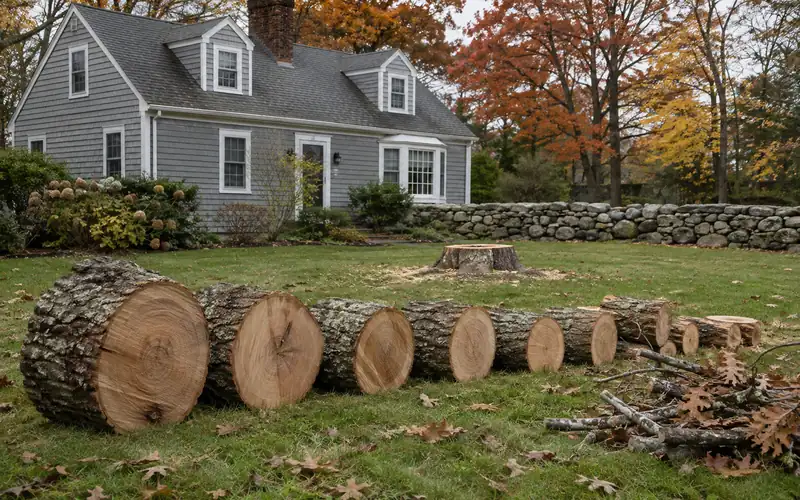
Tree Removal
Dead, dying, leaning or simply unwanted trees, including the tight ones that have to come down in sections over a roof.
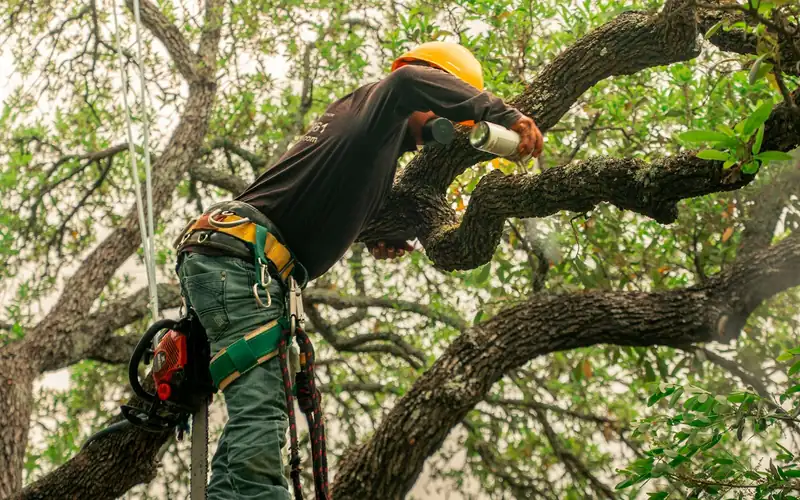
Pruning & Trimming
Deadwood out, limbs lifted off the roof and the service wire, and crowns thinned so the tree stands up to wind and snow.
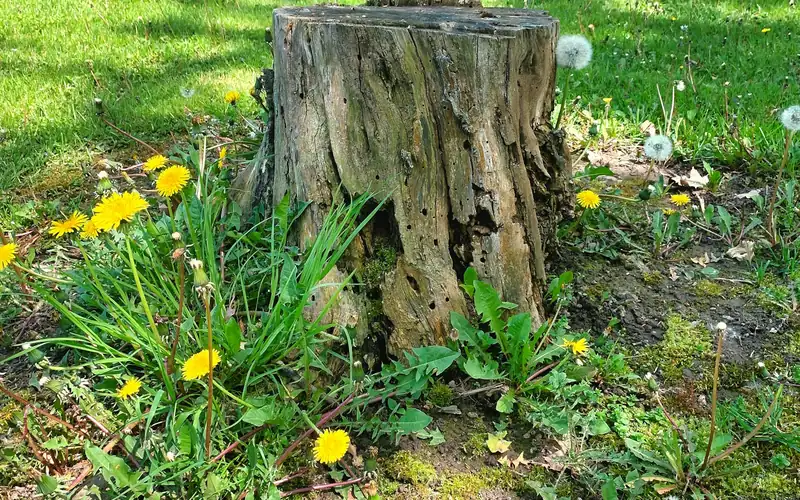
Stump Grinding
Grinding the stump below grade so the spot can be seeded, planted or paved, with the chips hauled off or left as mulch.
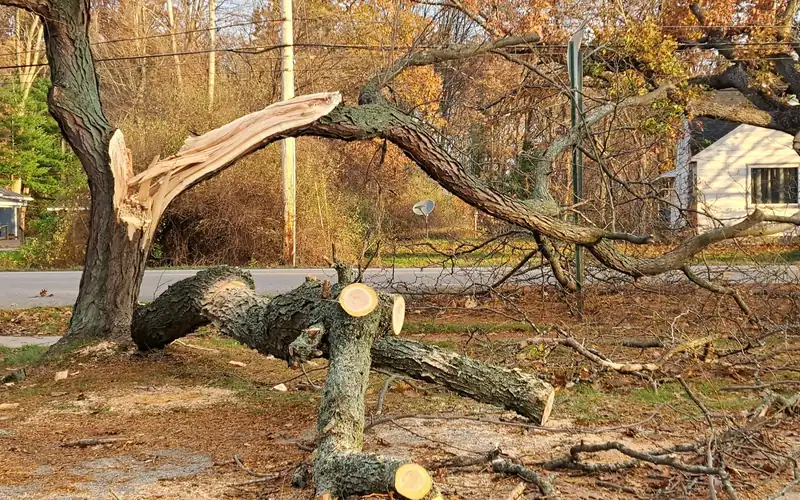
Storm Damage & Emergency Work
Trees and big limbs on the house, the car or the driveway after wind, ice or a nor'easter, once the utility has made any wires safe.
Not sure whose tree it is?
(978) 698-4783Tell us whether the trunk stands in your yard or in the tree belt between the sidewalk and the curb. In Melrose, that decides whether a permit and a certified arborist come into it.
Rules and permits
Who decides about trees in Melrose
Melrose's Tree Warden works out of the DPW at 72 Tremont Street and issues the permits for removing or majorly altering trees in the public right-of-way, in parks and on other city land; under state law, as the city quotes it, all trees within a public way or on its boundaries are public shade trees (Tree Hearing Procedure). For trees on private land, the rule to watch is the wetlands ordinance. We found no city permit for cutting a private tree outside it, and no designated scenic roads.
- Tree Warden
- DPW, 72 Tremont St, 781-665-0142
- Removing or majorly altering city trees
- Tree Warden permit; done or supervised by a certified arborist
- Removing a healthy city tree
- Hearing; requester pays removal and replacement, at least 2:1
- Wetlands
- Check with the Conservation Commission before any cutting within 100 ft
- Curbside brush
- Up to 1 in. diameter, bundled and tied
The Tree Warden permit. Removing a tree or shrub in the public right-of-way, park areas or other city-owned land, or making what the Tree Warden determines is a major alteration to it, needs a permit from the Tree Warden unless the Tree Warden ordered the work. The requirement applies to anyone in the business of cutting or removing trees. Anyone may apply, but all of the work has to be done or supervised by a certified arborist (Tree Hearing Procedure). If the limb over your driveway grows from a tree belt tree, ask the tree company whether it will pull the permit and who on the crew is certified.
Asking for a healthy city tree to come down. The request goes to the Tree Warden, who or whose designee inspects the tree for size, species, condition and its effect on nearby trees. Notice is posted on the tree and in at least two public places at least 7 days before the hearing and published in a local paper in two successive weeks, and the property owner is notified. The Tree Warden decides within 5 business days after the hearing and sends a letter if the answer is no. The applicant bears all hearing costs, and if removal is approved, the requesting owner, usually the abutter, pays for the removal and for replacement. The Tree Warden sets the size, species and location of the replacements, which generally add up to the removed tree's diameter; a 12-inch tree, for example, becomes four 3-inch trees, and for a healthy tree the ratio can't be less than 2:1 (Tree Hearing Procedure).
The city's own removals. The city takes down a tree only with the Tree Warden's consent, generally only when it is dead, dying or hazardous. Each tree slated for removal is posted with a date at least two weeks ahead, and an objection sends it back for review before it goes on the removal list. The Removals page lists those postings by address; in 2026 it has included a batch of ten on October 6 and postings marked National Grid in February and June. If a city tree near you looks doomed, check that page before you pay to take it down yourself. Afterwards, the stump goes on the city's list for grinding by an outside contractor, scheduled once there's a full day's work and by priority, and the spot is loamed and seeded (Stump Grinding).
Reporting a city tree. Call the DPW at 781-665-0142 with your name, phone, address and the work needed, or use the city's E-gov request system. A work order opens, the Tree Warden schedules an assessment, and work is scheduled by priority (Tree Assessments). Pruning works the same way, from a priority list (Pruning).
Wetlands and ponds. Melrose's wetlands ordinance, Chapter 231, regulates land within 100 feet of a resource area; ponds of any size and intermittent streams count as resource areas, and vernal pool habitat includes a 100-foot setback (Chapter 231). Asked whether you can cut trees in or near a wetland, the Conservation Commission answers: not without checking with it first. Not all tree cutting requires a filing, but all tree cutting in the buffer zone requires checking, and projects within 100 feet of a wetland, intermittent stream, river, pond or floodplain, or 200 feet of a river or perennial stream, should be discussed with the Commission (Conservation Commission FAQs). When a filing is needed, the ordinance adds a local fee on top of the state fee, so confirm the current amount with the Commission; filings go to the City Clerk at City Hall, 562 Main Street (Chapter 231).
Historic districts. The Downtown Melrose Historic District and the Benjamin Lynde House Historic District require certificates for exterior changes visible from a public way, fences and walls included; the 2026 ordinance doesn't name trees (Historic District Ordinance). If a removal there means taking out a fence or wall, ask the Historic District Commission first.
Digging. Massachusetts treats digging, augering and grading as excavation, and Dig Safe has to be told at least 72 hours ahead, Saturdays, Sundays and legal holidays not counted (M.G.L. c.82 §40A, definition of excavation, c.82 §40). Dig Safe advises that the hired contractor make that call (Dig Safe FAQs).
Wires. Melrose is served by National Grid (state electric company list), and the city notes that utilities such as National Grid also prune city trees to keep overhead lines clear (Pruning). If a tree brings a wire down, keep at least 30 feet away and call 911 or National Grid at 1-800-465-1212 (National Grid power line safety).
Last verified November 2026. Fees, restrictions and deadlines on this page are due for re-checking by January 2027. New England Tree Service is a referral service. We don't cut trees, request hearings or file with the conservation commission.
Brush, the City Yard and new trees
What happens to the wood in Melrose
Curbside yard waste. The city collects yard waste in paper bags or barrels, each under 45 gallons and 45 pounds, up to 10 per pickup and out by 7 a.m. Barrels need a free "yard waste" sticker from 72 Tremont Street, and brush is taken only up to 1 inch in diameter, bundled and tied (Yard Waste). Almost nothing from a tree removal fits that limit.
The City Yard. The DPW Recycling Center at the City Yard, 72 Tremont Street, is open Mondays, Tuesdays and Thursdays 7:30 a.m. to 2:45 p.m., and Saturdays from April through December 8 a.m. to 3 p.m. As of July 1, 2026, every vehicle needs a free City Yard sticker, issued with proof of residency and registration, to keep non-residents and businesses out (Yard Waste). A tree company's truck won't qualify, so put chipping and haul-away into the job.
Burning. Melrose isn't on the state's list of communities where open burning is always banned (open burning safety), but we found no city page on brush burning permits. Ask the Fire Department before you plan on it.
Ledge, rocks and floods. The 2023 open space plan describes bedrock at or near the surface in the southeast, southwest and along the western boundary, high ground around Mount Hood and Black and Melrose Rocks, and flooding, around Ell Pond and the Bennetts Pond Brook area, as the city's greatest natural hazard (open space plan). Shallow ledge can change what stump grinding is possible, so mention it if you know your lot has some.
New street trees. The city's Annual Tree Planting Program plants in the tree belt, the strip between the sidewalk and the curb. Requests go to the DPW at 781-665-0142 on a rolling basis, and the waitlist currently runs one to two years. Where there's no tree belt, the Tree Warden may plant a setback tree on private property, and residents are asked to water a new tree for at least a year (Annual Tree Planting Program). The city keeps new street trees 10 feet from driveways, hydrants and street lights, 5 feet from underground utilities, 15 feet from storm inlets and 30 feet from intersections (Minimum Distance Standards).
Ash trees. We found no Melrose pest notice. Emerald ash borer has been confirmed in 280 Massachusetts communities, and the state recommends chipping ash or leaving it on site (state emerald ash borer guide).
FAQ
Melrose tree questions
Can my tree company prune the city tree in front of my house?
Not without checking with the Tree Warden: removal, or pruning the Tree Warden counts as a major alteration, needs a Tree Warden permit, which anyone may apply for, and all the work must be done or supervised by a certified arborist. The permit covers trees in the public right-of-way, parks and other city land.
What does it take to remove a healthy city tree?
A request to the Tree Warden, an inspection and a public hearing with posted and published notice. If removal is approved, the person asking pays for the hearing, the removal and replacement trees, generally adding up to the removed tree's diameter and not less than 2:1 for a healthy tree: a 12-inch tree, for example, becomes four 3-inch trees.
Will the city take branches at the curb?
Only brush up to 1 inch in diameter, bundled and tied, plus yard waste in paper bags or stickered barrels, up to 10 items. The City Yard at 72 Tremont Street takes the same 1-inch brush with a free resident vehicle sticker, so larger wood leaves with the tree company.
Do I need permission to cut a tree near a wetland or pond?
Check with the Conservation Commission first. Not every cut needs a filing, but the Commission says all tree cutting in the buffer zone requires checking, and Melrose's wetlands ordinance covers land within 100 feet of ponds of any size and intermittent streams.
What does it cost me to use New England Tree Service?
Nothing. The request and the referral are free; the tree company prices the work.
Nearby