Home › Massachusetts › Stoneham
Tree Service in Stoneham, MA
In Stoneham, a tree within 100 feet of a wetland or pond, or 200 feet of a river, doesn't come down until the Conservation office has a certified arborist's letter and has given written permission (Conservation Tree Policy). Call (978) 698-4783 or use the form. A person reads every request and replies with what happens next.
- Free for homeowners
- Insurance checked first
- From the Fells to the Reading line
Ask About Tree Service in Your Area
Tell us about the tree and how close it stands to water, wires and the house. A person reads it and replies with what happens next.
Please add your name, a 10-digit phone number and a valid email.
Your request didn't go through on our end. Please call (978) 698-4783 so it isn't lost.
Too many requests have come from this connection in a short time. Please call (978) 698-4783 and we'll take it from there.
We couldn't finish the spam check. Wait a moment and send it again, or call (978) 698-4783.
Tree work in Stoneham
Tree jobs on Stoneham's rocky, wooded lots
Tree Removal
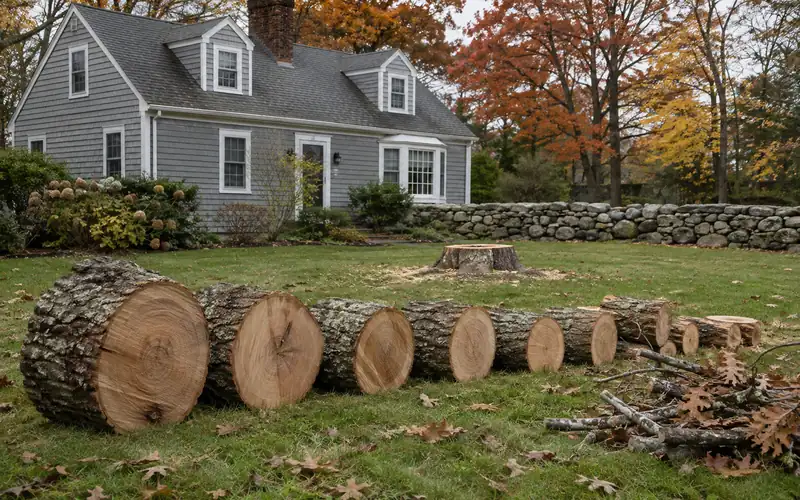
Dead, dying, leaning or simply unwanted trees, including the tight ones that have to come down in sections over a roof.
Pruning & Trimming
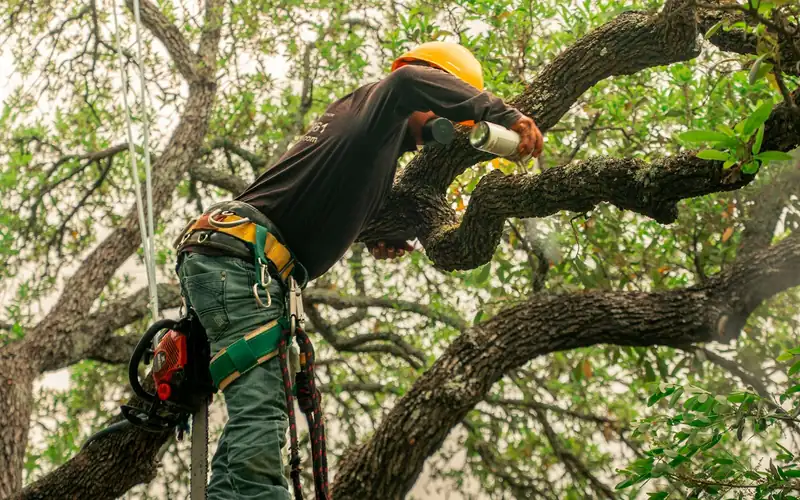
Deadwood out, limbs lifted off the roof and the service wire, and crowns thinned so the tree stands up to wind and snow.
Stump Grinding
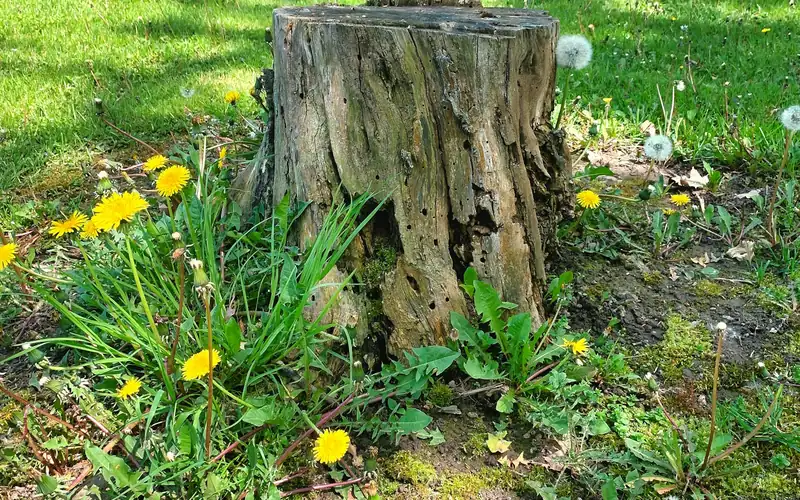
Grinding the stump below grade so the spot can be seeded, planted or paved, with the chips hauled off or left as mulch.
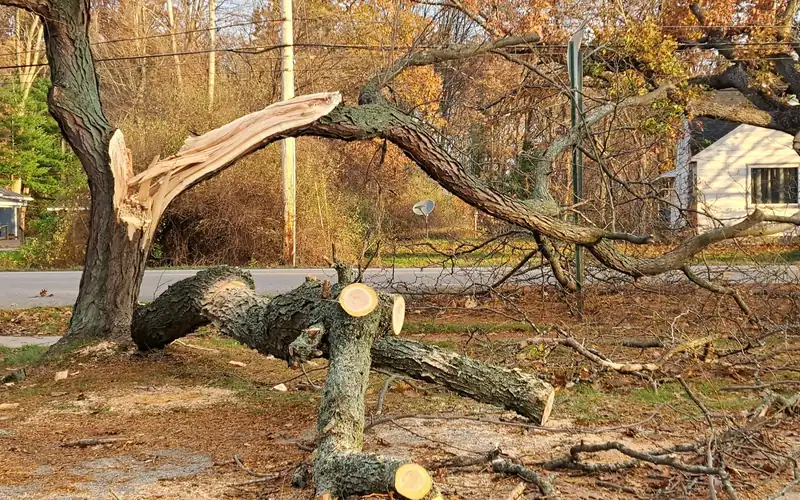
Storm Damage & Emergency Work
Trees and big limbs on the house, the car or the driveway after wind, ice or a nor'easter, once the utility has made any wires safe.
Not sure what the tree needs?
(978) 698-4783Bedrock sits very near or at the surface in much of Stoneham (open space plan). Mention ledge, and tell us if a pond, brook or wetland is within a couple hundred feet.
Rules and permits
Who decides about trees in Stoneham
Two offices matter for most Stoneham tree jobs. The DPW, through the tree warden, controls town trees at the street and in parks. The Conservation office controls trees on private land near water, and its tree policy is stricter than most. We found no designated scenic roads and no town permit for cutting a private tree away from wetlands.
- Town trees
- Between sidewalk and curb, or in parks; DPW, 16 Pine St, 781-438-0760
- Removing a town tree
- Public hearing before the tree warden
- Near water
- Within 100 ft of a wetland or pond, 200 ft of a river: arborist letter and written Conservation permission
- Wetland strip
- 25 ft left untouched and natural
- Burning
- January 15 to May 1, with a same-day call to the Fire Department
- Brush drop-off
- Stevens Street; branches under 8 in. thick, 4–6 ft long
Town trees and Chapter 24. The town's Trees bylaw gives the tree warden, or a designee, the planting, care and removal of trees on public property under the state's tree warden and shade tree laws. A public shade tree that comes down for disease, death, nuisance, construction or safety is replaced one for one, with the tree warden picking the species and size and, where possible, the same spot. A Tree Committee writes an annual community forestry work plan, and anyone building several houses must plant two trees per lot, four on a corner lot, before the street is paved (Tree Bylaw, Chapter 24 text).
Is it a town tree? The DPW's rule of thumb: a tree between the sidewalk and the curb belongs to the town, and so does a tree in a park or other public space. Without a sidewalk or curb to go by, call the DPW to find out. Private trees are the lot owner's responsibility, and only the town, through the DPW, may prune, cut or remove a town tree; unauthorized work carries fines (What is a Town Tree). For trimming, call the DPW at 781-438-0760; the tree warden inspects and ranks the tree against other requests.
What the DPW will and won't do. The Tree Care Program exists mainly for public safety, taking out dead and dangerous limbs and trees along streets and on public grounds. The DPW says it doesn't remove town trees without good reason, and leaves, acorns, branches, sap, size, a shaded lawn or an inconvenient spot don't qualify. Taking down a public shade tree needs a public hearing before the tree warden, as state law requires (Tree Care Program). The town no longer runs a spraying program, and requests for a new public shade tree go on a waiting list for spring planting, budget permitting (DPW FAQs). There's a fillable Tree Request Form, and the Tree Committee advises the tree warden and DPW.
The Conservation tree policy. For a tree within 100 feet of a wetland or pond, or 200 feet of a river, the town's posted policy asks for three things before any work: written notice to the Conservation office with the tree's location, diameter at breast height, height, species, the nearby wetland, photos and a sketch; a letter from a certified arborist that the tree is an immediate threat, plus a wetland scientist if the tree is in a resource area; and written permission from the Conservation office. In a resource area, each tree 6 inches or more across is replaced with one native deciduous shade tree or evergreen, or two large shrubs or small trees, or three shrubs; replacement trees must be 4 to 10 feet tall with a trunk caliper of at least 3 inches, and plantings go in within 180 days and must survive two growing seasons. A snag with an 8- to 15-foot trunk can be left instead, and with the Commission's agreement the owner can pay into the Shade Tree Fund, at least $1,050 per tree. One or two trees that are an imminent hazard go through the Hazardous Tree Protocol with the same notice, letter and permission; three or more need an emergency certification (Tree Policy, policy PDF).
Wetlands bylaw and regulations. Chapter 11 of the town bylaws requires a 25-foot strip next to wetlands to stay untouched and in its natural state, presumes land within 100 feet of resource areas and 200 feet of rivers, ponds and lakes is important to protect, and allows fines of up to $300 a day (Wetlands Protection Bylaw). The town's 2016 regulations list cutting or trimming trees and shrubs as a regulated activity, expect the 100-foot buffer to stay naturally vegetated and bar dumping brush or leaves in any resource area (Wetlands Regulations). The town's quick guide allows limited vista pruning, says clearing understory or cutting whole trees near wetlands needs Conservation permission, and advises checking with Conservation, at 781-279-2696, before hiring a tree company (Living with Wetlands).
Scenic roads and historic districts. We found no scenic roads designated by the town. The Middlesex Fells Reservation Parkways, state roads designed by Charles Eliot, are on the National Register, and Stoneham has four other National Register districts, Nobility Hill and Central Square among them; with no local historic district commission, we found no local review of tree work in any of them (open space plan).
Grinding and digging. Massachusetts treats digging, augering, grading and similar ground work as excavation and requires notice to Dig Safe at least 72 hours ahead, weekends and legal holidays excluded (M.G.L. c.82 §40A, definition of excavation, c.82 §40). Dig Safe suggests the hired contractor make that call (Dig Safe FAQs), so settle who files the ticket before a grinder shows up.
Wires. Stoneham's electric company is Eversource (NSTAR Electric), per the state's utility list. Eversource trims along its circuits on a schedule, keeping 8 feet to the sides, 10 feet below and 15 feet above the lines, and trims the pole-to-house wire only when branches press on it. If you hire a tree company, you can call Eversource about temporarily dropping the service wire while the crew works (Eversource tree trimming FAQs).
Last verified November 2026. Fees, restrictions and deadlines on this page are due for re-checking by December 2026. New England Tree Service is a referral service. We don't cut trees, request hearings or file with the conservation commission.
Brush, burning and the Fells
Where Stoneham's brush and branches go
Stevens Street Recycling Center. For 2026 the center is open April 1 through November 30: Saturdays 8 a.m. to 1 p.m. and Mondays 8 a.m. to noon for yard waste and white goods, and Wednesdays 3:30 to 6 p.m. for yard waste only, closing at 5 p.m. in November. Each vehicle needs a recycling sticker (2026 Stevens Street hours). It's for residential trash customers only, and branches must be under 4 to 6 feet long and under 8 inches in diameter; stickers are sold at the DPW, 16 Pine Street, weekdays 7:30 to 3 (brush and lawn waste, recycling program). A trunk thicker than 8 inches won't fit those rules, so decide on chipping or hauling with the tree company.
Curbside is for leaves. Fall 2026 curbside leaf pickup runs the weeks of October 26, November 2, November 16 and November 30, ending December 4, and branches and brush are not picked up (2026 fall leaf pickup).
Burning, one day at a time. The Fire Department's site allows open burning from January 15 to May 1, 10 a.m. to 4 p.m. You call 781-438-0127 on the day you want to burn with your name, address, burn spot and material; the permit is verbal, good for that day only, and can be refused or cancelled. Burn only on land close to where the material came from, more than 75 feet from any dwelling, and only brush, cane, driftwood and forestry debris; grass, hay, leaves and stumps are out (Stoneham open burning). Stoneham isn't among the 22 communities where the state bans open burning outright (state open burning page).
More trees coming down than going in. The town's 2018 open space plan noted that Stoneham had been a Tree City USA for 17 years, and that over five years the DPW planted 61 trees and pruned more than 700 but removed more than 300. It called for a street tree inventory and noted that in the built-up parts of town the canopy comes from street and yard trees (open space plan). When a private tree comes out, think about what goes back in.
Oak, pine and hickory. Around Spot Pond and the Fells, the same plan describes a mix of red and white oak, white pine and hickory, with maple, ash, beech, birch, fir, spruce and hemlock in smaller numbers. Emerald ash borer has been confirmed in 280 Massachusetts communities, and the state advises chipping ash or leaving it on site instead of moving it (state emerald ash borer guide); mention a dead or thinning ash when you call.
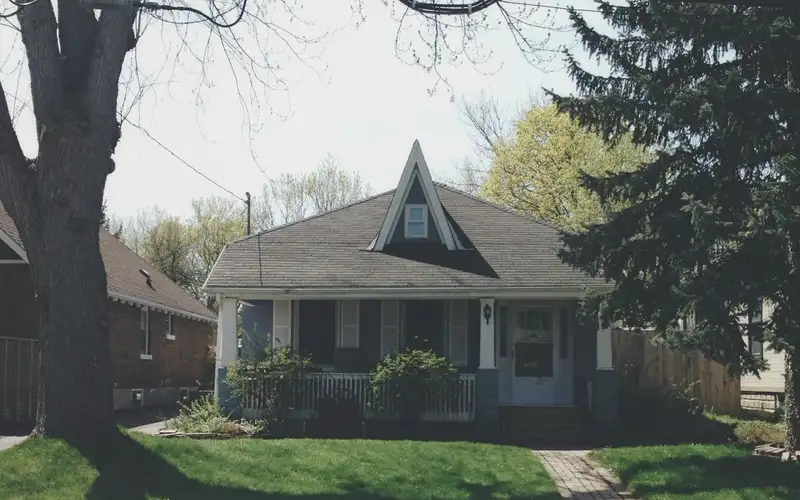
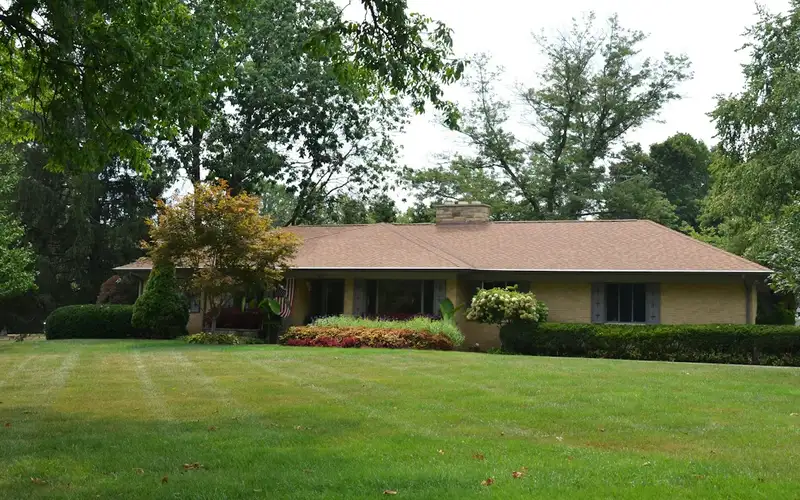
Middlesex Fells
The Fells covers roughly the southern third of Stoneham, and its woods may reflect more than 500,000 trees planted in the early 1900s (open space plan).
Whip Hill
Outside the Fells, the town's open space plan finds no significant woodland except Whip Hill (open space plan).
FAQ
Stoneham tree questions
Is the tree by my sidewalk mine or the town's?
If it grows between the sidewalk and the curb, Stoneham counts it as a town tree, and only the town, through the DPW, may prune, cut or remove it; unauthorized work carries fines. Where there's no sidewalk or curb, call the DPW at 781-438-0760 and ask.
Will the town take down a street tree that drops sap and leaves on my car?
Usually not. The DPW says it won't remove a town tree for leaves, acorns, branches, sap, size, shade on a lawn or an awkward location, and removing a public shade tree takes a public hearing before the tree warden under state law. To have one inspected, call 781-438-0760 and get on the tree list.
My yard backs onto a pond. What does Conservation need before a tree comes down?
Written notice with the tree's location, trunk diameter, height, species, photos and a sketch; a certified arborist's letter that the tree is an immediate threat; and written permission from the Conservation office. Trees 6 inches or more across in a resource area are replaced, or, if the Commission agrees, paid for at a minimum of $1,050 per tree into the Shade Tree Fund. Conservation is at 781-279-2696.
Where do the branches go after the job?
Residents on town trash service can bring branches under 8 inches thick and 4 to 6 feet long, with a recycling sticker, to the Stevens Street Recycling Center, open April 1 through November 30, 2026. The fall curbside pickups take leaves only. Brush can be burned in season after a same-day call to the Fire Department, but stumps can't.
What does it cost me to use New England Tree Service?
Nothing. The request and the referral are free; the tree company prices the work.
Nearby