
Home › Massachusetts › Wakefield
Tree Service in Wakefield, MA
Wakefield's Conservation Commission allows no tree to be cut in its jurisdiction, landscaped yards included, without permission, and each live tree 6 inches or more across is replaced (Tree Removal Policy). Call (978) 698-4783 or use the form. A person reads every request and replies with what happens next.
- Free for homeowners
- Insurance checked first
- From Lake Quannapowitt to Breakheart
Ask About Tree Service in Your Area
Describe the tree and say whether a lake, brook or wetland is nearby. A person reads it and replies with what happens next.
Please add your name, a 10-digit phone number and a valid email.
Your request didn't go through on our end. Please call (978) 698-4783 so it isn't lost.
Too many requests have come from this connection in a short time. Please call (978) 698-4783 and we'll take it from there.
We couldn't finish the spam check. Wait a moment and send it again, or call (978) 698-4783.
Tree work in Wakefield
Tree jobs around Wakefield's lakes and woods
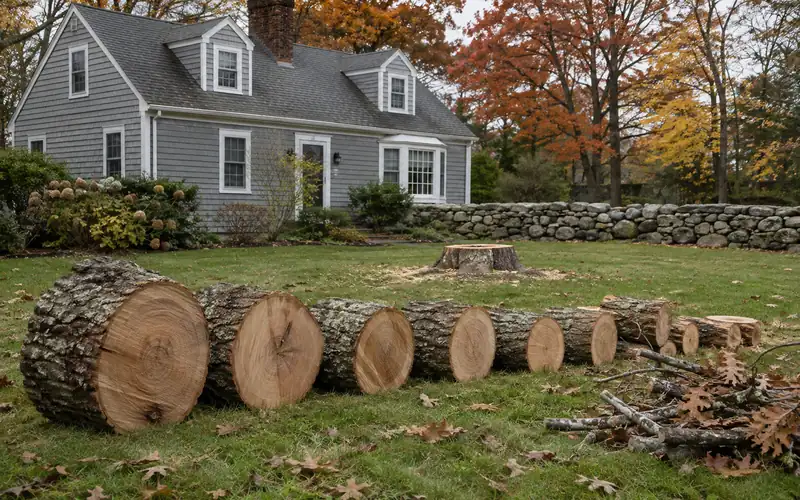
Tree Removal
Dead, dying, leaning or simply unwanted trees, including the tight ones that have to come down in sections over a roof.
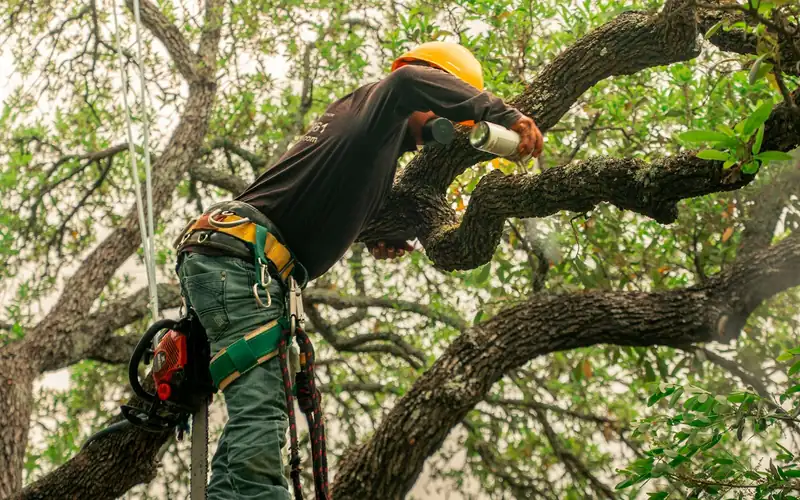
Pruning & Trimming
Deadwood out, limbs lifted off the roof and the service wire, and crowns thinned so the tree stands up to wind and snow.
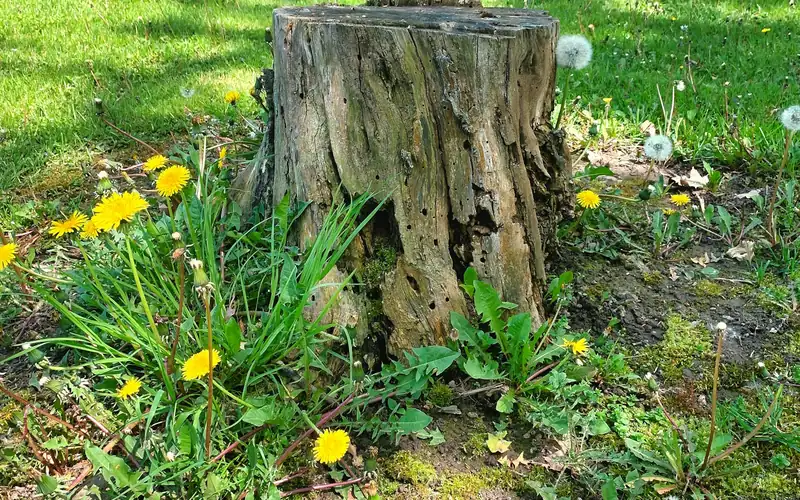
Stump Grinding
Grinding the stump below grade so the spot can be seeded, planted or paved, with the chips hauled off or left as mulch.
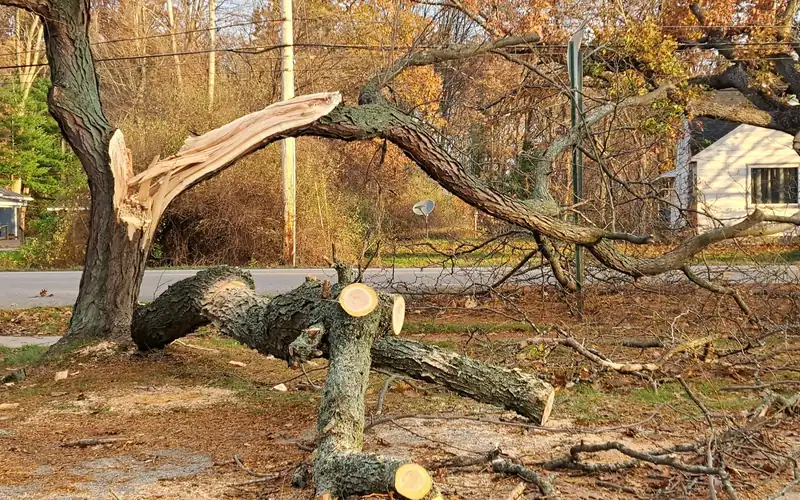
Storm Damage & Emergency Work
Trees and big limbs on the house, the car or the driveway after wind, ice or a nor'easter, once the utility has made any wires safe.
Not sure which job it is?
(978) 698-4783Tell us how far the tree is from water or wet ground, and whether it's in a lawn or in the woods. Near a wetland, Wakefield treats those two cases differently.
Rules and permits
Who decides about trees in Wakefield
Public shade trees in Wakefield belong to the DPW's Forestry Division, and residents may not remove them (Forestry FAQs). On private land near water, the Conservation Commission's Tree Removal Policy decides what may come down and what gets planted back. On a designated scenic road, the Planning Board holds a hearing as well. We found no town permit for cutting a tree on private land outside those rules.
- Forestry Division
- DPW, 1 Lafayette St, 781-246-6301 ext. 3, weekdays 7 to 3
- Whose tree is it?
- DPW, 781-246-6301 ext. 4120
- Near wetlands
- No cutting without Conservation permission; live trees 6 in. and up are replaced
- Scenic roads
- Trees 4 in. and up in the right-of-way need a Planning Board hearing
- Burning
- Call-in permit, Jan 15 to May 1, 781-246-6432
Public shade trees. The Forestry Division, at 1 Lafayette Street, plants, prunes, sprays and removes public shade trees on public property, handles emergency tree problems and does seasonal work around Lake Quannapowitt; it's reachable at 781-246-6301 ext. 3, weekdays 7 to 3 (Forestry Division). The DPW doesn't remove trees on private property. It investigates requests to take down public trees and removes the ones it finds hazardous, but not trees that are simply too big, inconveniently placed, shading a yard or dropping leaves and acorns, and removing a public shade tree requires a public hearing under state law. When roots lift a sidewalk, the DPW inspects and tries to keep the tree while removing the hazard. For a public tree that has fallen, call 781-246-6301 ext. 4120 during business hours, or 781-246-6316 or 781-246-6321 ext. 3 after hours (Forestry FAQs). The town also runs a CommuniTree tree donation program.
The Conservation tree policy. The Commission's Tree Removal Policy, approved July 6, 2017 and last amended January 2, 2024, covers every jurisdictional area, natural or landscaped: resource areas, buffer zones, land under water, flood land, riverfront and town land in the Commission's care. No tree may be cut or removed there without permission. You send the Conservation Department a written request with the location and the reason, and a member or the Agent visits. Dead or visibly diseased trees can be approved on the spot; others go to a public meeting, and the decision comes by letter or email. The Commission may ask for a licensed arborist's letter (Tree Removal Policy).
Replanting, snags and the fund. Each live tree 6 inches or more in diameter at 4 feet is replaced with one deciduous shade tree of at least 2.5 inches, one evergreen of 5 to 6 feet or more, two large shrubs of 5 to 6 feet or more, or three small shrubs of 3 feet or more, native in the buffer. The planting plan is approved before anything is bought, plantings go in within 180 days of the cutting, they're checked at six months, one year and two years, and anything that doesn't survive two growing seasons is replaced. The Commission may require a trunk 6 to 15 feet tall to be left standing as a snag. Where replanting on site isn't practicable, it may accept a Habitat Replacement Fund contribution of $250 minimum to $500 maximum in lieu of replacement. Stumps may be ground below the surface only in landscaped areas or outside the 25-foot buffer, and equipment stays on landscaped or paved ground unless that's waived (Tree Removal Policy).
A wetlands vote on November 16, 2026. For now the Commission applies the state Wetlands Protection Act alongside the policy above. A proposed local wetlands bylaw goes to Town Meeting on November 16, 2026 (Proposed Wetlands Bylaw); check with the Conservation Department for the outcome before planning work near a wetland.
Scenic roads. Wakefield's Scenic Roads bylaw, adopted in 2003 and amended in 2018, requires a public hearing before trees or stone walls in a designated scenic road's right-of-way are altered. A tree is anything with a trunk 4 inches or more across at 4 feet, and altering it includes removal, cutting major branches, or cutting roots badly enough, in the Tree Warden's written opinion, to kill it in time; taking out more than 10 linear feet of wall counts too. The Planning Board gives its consent separately from the Tree Warden's under the public shade tree law, one doesn't stand in for the other, and nothing happens until the state law is satisfied. Notice runs twice, the first at least 14 days and the last at least 7 days before the hearing; the hearing comes within 30 days of a complete filing and a decision within 45 days, approvals lapse after two years, and the fee covers advertising and notification costs. A lot on a scenic road gets one driveway cut, no wider than 12 feet, and trees over 8 inches can't come down for it unless the cut can't safely go anywhere else. Unapproved work means restoration, replacement trees matching the lost trunk area measured 1 foot above the ground, and fines up to $300 per violation (Scenic Roads bylaw). Designation takes a two-thirds Town Meeting vote and excludes numbered routes and state highways (designation section). We found no published list of designated roads, so ask the Planning Board if your street might be one.
Last verified November 2026. Fees, restrictions and deadlines on this page are due for re-checking by November 2026. New England Tree Service is a referral service. We don't cut trees, request hearings or file with the conservation commission.
Wires and gas lines
Wakefield's own gas and light department
Wakefield gets both electricity and gas from the Wakefield Municipal Gas & Light Department, 480 North Avenue (state electric company list, WMGLD FAQs). Outages and gas leaks go to the same number, 781-246-6363; crews stay on duty through storms, and after hours you leave a message. WMGLD notes that tree limbs bringing down lines cause outages, and it keeps an outage map (gas leaks and other problems). We found no WMGLD tree trimming page, so call that number before work near its wires.
Before anything goes in the ground. WMGLD's Dig Safe page says to call 1-888-344-7233 or use digsafe.com; a ticket is good for 30 days, utilities mark within 72 hours, and WMGLD marks its gas lines in yellow and its electric lines in red (WMGLD Dig Safe). State law counts digging, augering and grading as excavation and requires that notice at least 72 hours ahead, not counting weekends and legal holidays (M.G.L. c.82 §40A, definition of excavation, c.82 §40), and Dig Safe recommends that the hired contractor make the call (Dig Safe FAQs). In a town where the same utility runs gas under the street, settle with your tree company who handles it.
Brush, burning, town woods and pests
Where the wood goes in Wakefield
Nahant Street Yard Waste Site. Residents can bring leaves, grass, clippings, shrubs and brush from April through December, weather permitting, with a $25 annual permit from the DPW office or online and proof of residency. Commercial vehicles, trucks over half a ton and landscaping companies aren't allowed (Yard Waste), so a tree crew can't unload there; agree on chipping and haul-away up front.
At the curb. For curbside leaf collection, branches are cut to 3 feet or less and tied in bundles no more than 18 inches across (Yard Waste).
Burning brush. Open burning is allowed from January 15 to May 1. Call the Fire Department at 781-246-6432 for a verbal permit, which is logged and good for two days, and call each day you burn. Brush, cane, driftwood and forestry debris may be burned, but not grass, hay, leaves, stumps or land-clearing debris; burning typically runs 10 a.m. to 4 p.m., at least 75 feet from any dwelling. Fire pits up to 3 feet across are allowed year-round, 75 feet from structures (Open Burning & Fire Pits).
Woods and wet ground. The town's 2024 open space plan puts deciduous forest at about 28 percent of the town's land cover and forested wetland at about 8 percent, and lists Breakheart Reservation, Reedy Meadow and the Town Forest among its open spaces (open space plan).
Ash trees. We found no Wakefield pest notice. Statewide, emerald ash borer has been confirmed in 280 communities, the whole state is in the national quarantine zone, and the state advises chipping ash or leaving it on site (state emerald ash borer guide).
FAQ
Wakefield tree questions
Can I take down the town tree in front of my house?
No. Residents may not remove public shade trees in Wakefield. The DPW investigates removal requests and takes down trees it finds hazardous, but not for being too large, badly placed, shady or messy, and removing a public shade tree requires a public hearing. Call DPW at 781-246-6301 ext. 4120.
What do I have to replant if I cut trees near a wetland?
For each live tree 6 inches or more across at 4 feet, the policy calls for one deciduous shade tree of at least 2.5 inches, or one evergreen of 5 to 6 feet, or two large shrubs, or three small shrubs, native in the buffer, planted within 180 days. The Commission can instead accept a Habitat Replacement Fund contribution of $250 to $500.
Can the stumps be ground after a buffer zone removal?
Only in landscaped areas or outside the 25-foot buffer, and the grinding equipment has to stay on lawn or pavement unless the Commission waives that.
How do I get a burning permit?
Call the Fire Department at 781-246-6432 on a day you want to burn between January 15 and May 1. The permit is verbal, logged and good for two days, and you call each burn day. Brush, cane, driftwood and forestry debris are allowed; stumps, leaves and land-clearing debris are not.
What does it cost me to use New England Tree Service?
Nothing. The request and the referral are free; the tree company prices the work.
Nearby